ellen

Category: ellen

  • Talk to an Expert

    Talk to an Expert

    It is easy to overlook how the constant online work can affect your mental health. I spoke with Michelle Fensney, a psychology professor at the University of Oregon and a licensed psychologist, about the ongoing landscape of social media and the burnout that accompanies it. We touched on previous blog topics that I have written about to get the perspective of a mental health professional.  

    Mental Health Benefits in Agency Life 

    Early PR careers tend to start in agencies, where the pace can be fast and expectations can be raised very quickly. “I think it is important for companies to be thinking about their employees’ mental health and well-being in addition to physical health… ensuring that mental health care is a part of those health care benefits, I think is really important,” Fensney said. “Also, when people’s mental health is good, they are going to be better employees and better workers.” She adds. If agencies prioritize their employees’ mental health via benefits and work culture, two things will happen: 1. A Better work culture with more people wanting to work there, and 2. Better outcomes for clients, which ultimately gives a better reputation to the agency. 

    Meaningful Work Means Something 

    “There are actually two forms of well-being: One is hedonic well-being, which is more of the kind of happiness, and feeling pleasure. But then there’s another form of well-being, called eudaimonic well-being, which is more of this well-being that’s derived from doing something that’s important and meaningful to you.” Fensney explains. Putting this idea into the theme of my blog, when you post something (work or personal), if there is a good intention behind it, and/or it aligns with your morals, it actually helps your mental health and physical health. 

    Always On’ Mentality 

    As I have talked about, the PR world tends to have this 24/7 type of work culture, where the weekend can seem more like a weekday, but this can be exhausting. Fensney talked about how it is important to find a transition activity between social media for work and social media for personal use. She also emphasized boundaries, and communicating them with clients and employers is very important for having and maintaining good mental health when it comes to work/life balance. 

    Burnout 

    I have talked a lot about burnout on this blog, so I asked Fensney about how she would address it if a client were to come to her with these issues. “What I do is telling clients, okay, I want you to go for this week, monitor your emotions every day, or monitor you thoughts… take a week to document how they are feeling and what days maybe they are spending more or less time on social media and how this is impacting them.” She responded. She also said that being able to identify the early signs of burnout is very important for the recovery process.

  • Empathy – It’s more than just a buzzword

    Empathy – It’s more than just a buzzword

    Empathy is the ability to understand and share the feelings of others. In PR and work on social media, it is not just a skill but something necessary for the job. As digital communication becomes more and more central to our professional lives, empathy becomes a tool for effective messaging and protecting mental health. 

    Why it matters 

    The core of PR is about building relationships – whether it is with clients, journalists, connections on LinkedIn, or the public. PR professionals who use empathy in their work are able to craft messages that resonate with their audiences. Empathy plays a big role in the loyalty and trust of others, so when work relies on different kinds of relationships, it is beneficial to your mental health and your work to act with empathy. 

    Empathy on social media 

    Social media can be a fast-paced and noisy environment where brands and professionals are constantly seeking attention. Empathy is what helps content break through the noise (so to speak) and ultimately helps your audience connect to the content and brand better. This means listening to your audience and responding authentically, not just marketing messages. 

    Empathy and Mental Health 

    The need for empathy is just as important for PR professionals to show to themselves and their coworkers and colleagues. The pressures of the “always on” work culture, rapid response expectations, and sometimes public scrutiny can take a toll on mental health. By fostering a culture of empathy within teams, like weekly check-ins and encouraging open conversations about stress, agencies can create a healthier work environment and a more supportive work culture. 

    Empathy-driven communication isn’t just good for business purposes but also people. When PR professionals prioritize understanding both their audiences and themselves, they are better equipped to manage the emotional toll of the job and maintain their own mental health.

    In the public relations industry, empathy is more than a buzzword, it is the foundation for meaningful connections, effective communication, and a better work culture. By embracing empathy, PR pros can not only serve their clients and audiences better but also protect their own mental well-being in a demanding digital landscape.

    https://www.linkedin.com/pulse/why-empathy-crucial-skill-marketers-pr-pros-ronn-torossian-5wpr-ceo/

  • Telling the Story of Burnout

    Telling the Story of Burnout

    In the constant online culture of public relations work, mental health tends to be on the back burner. With pressures and deadlines, and the need to be online for communication can be stressful and cause burnout. But how do we effectively communicate that this is an important issue to help PR professionals improve and maintain their mental health? 

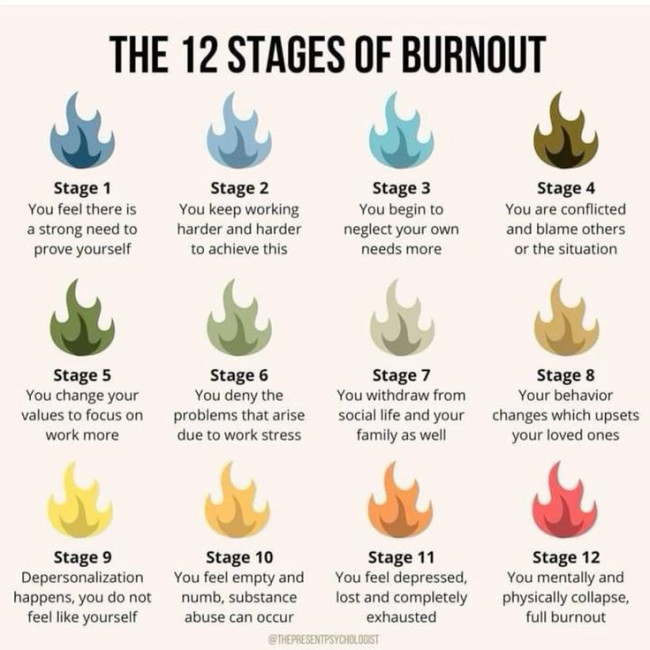
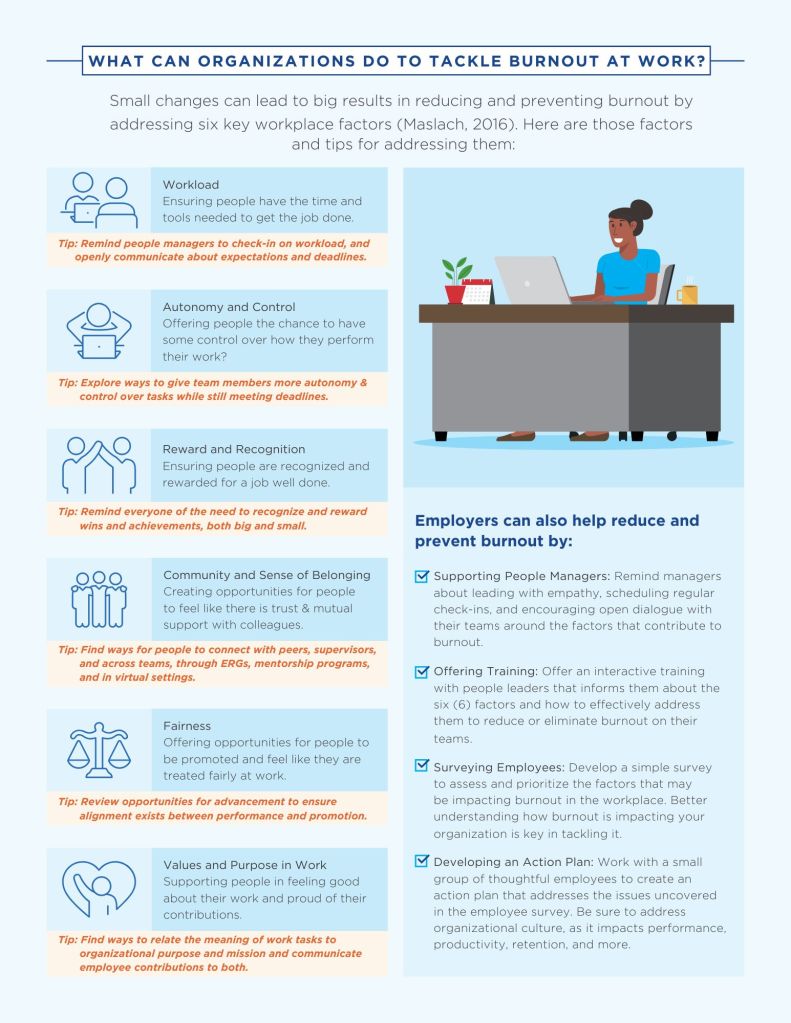
    The first infographic is from this Instagram account with the handle @thepresentpsychologist, walking through the stages of burnout. The second infographic is from the Center for Workplace Mental Health, titled “Burnout, Beating Burnout at Work.”

    This infographic walks us through the stages of burnout for someone might experience. This is a simple but powerful visual that shows the worsening effects of burnout accompanied by clear, relatable descriptions for each one. The colors of the flame (representing the ‘burn’ or burnout) are different according to the different stages, which are numbered so they are easy to follow. This has a clean look that is easy to read. The stage numbers are bolded, and descriptions are underneath. 

    This infographic tells a compelling story by breaking down burnout into stages. This step-by-step visual helps viewers recognize where they are or notice it when it does happen. It’s not only informative but also a wake-up call to prioritize self-care. 

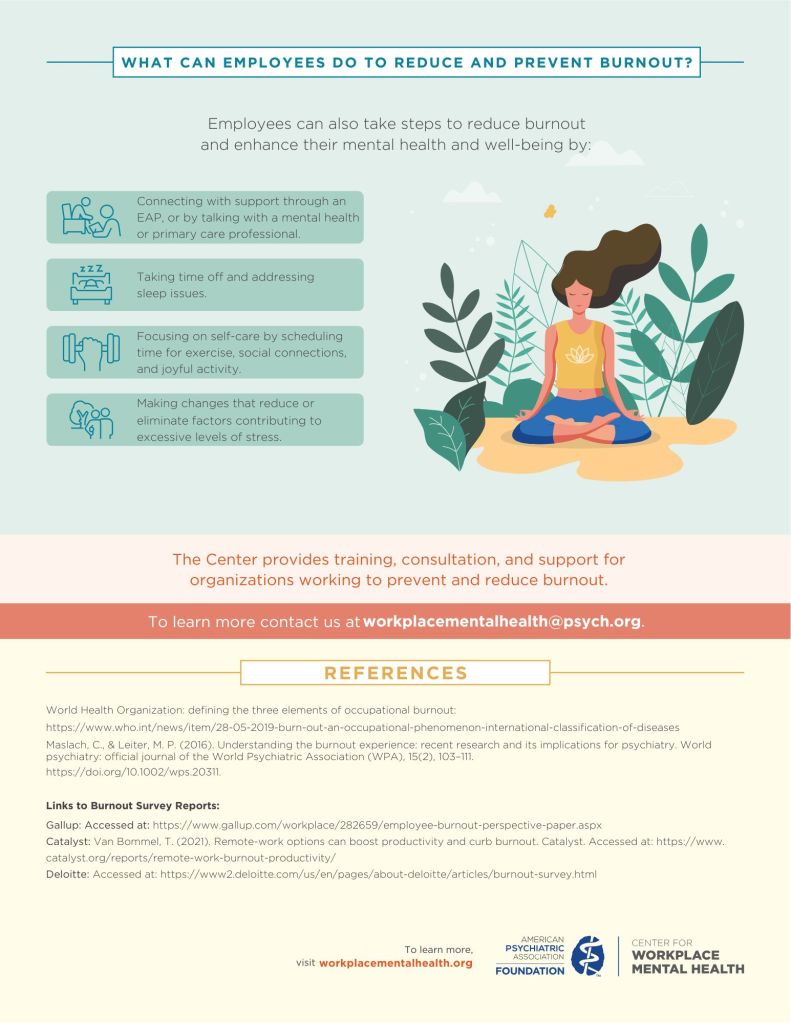
    This second infographic is from the Center of Workplace Mental Health, going more in-depth about burnout, like what it is, how common it is, what employees can do to help reduce burnout, and more. It is organized into clear sections with bolded headers. The information is grouped where it flows nicely, where readers can easily follow. The colors are subtle but are used to help section the different topics. I think this infographic balances pictures and information well; it’s not overwhelming information, but still gets the message across. By combining definitions, real statistics, and solutions, this infographic tells a full, well-rounded story about burnout. 

    Both of the infographics use thoughtful design elements like visuals and colors, balanced with information. Both are effective but in different ways: the “12 stages” uses visual storytelling via the flames, while “Beating Burnout at Work” balances data and actionable guidance to inform and empower whoever reads it. Together, both infographics educate, engage, and inspire action that can demonstrate the power of effective design in telling a story with data to back it up. 

    https://workplacementalhealth.org/employer-resources/infographics/infographic-beating-burnout-at-work

  • Can We Talk About Mental Health In PR Agencies Already?

    Can We Talk About Mental Health In PR Agencies Already?

    For many public relations professionals, social media is a tool and is constantly a part of their work. While this enables real-time engagement and quality work, it comes at the cost of stress, anxiety, and burnout among PR professionals. 

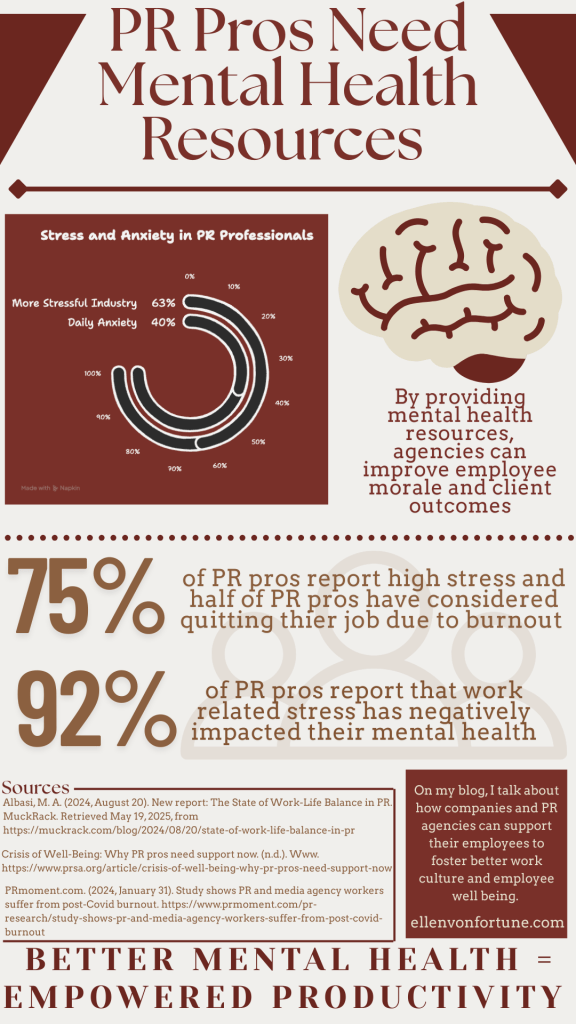
    Recent studies show that 92% of PR professionals report that work-related stress has negatively impacted their mental health, with many experiencing feelings of loneliness and burnout. The nature of social media is a 24/7 news cycle, pressure to respond right away, and the emotional toll of being active online every day, leaving little room for downtime. 

    Social media burnout doesn’t just affect emotional well-being but also physical health. Overwhelming workloads and the expectation to be always “on” can lead to insomnia, weakened immune systems, and more. For industry leaders, let me translate: this means higher turnover, lower morale, and decreased creative output. 

    To maintain a healthy, high-performing work environment, PR agencies, I believe, should move beyond surface-level wellness initiatives and invest more in mental health support. Here are some ideas: 

    • Access to counseling: whether it’s virtual or in-person sessions with a mental health professional, can help people who might struggle or do struggle with stress or anxiety due to social media. 
    • Mental health days: including mental health days (used like sick days), would allow professionals to step back and recharge, reducing the risk of frequent burnout. 
    • Benefits: When hired, employees get discounted access to meditation apps, gym memberships, or other mental health supportive resources. 
    • Workshops: regular training on stress management and self-care when experiencing burnout, which would empower employees to prioritze their mental well-being. 

    Fostering a workplace culture where mental health is openly talked about is equally as important as other initiatives taken. PR agencies are uniquely positioned to lead by example, using their communication expertise to normalize conversations about mental health, both internally and in the work they do for their clients. Sharing personal stories, collaborating with mental health organizations, and running mental health awareness campaigns can help reduce the stigma around mental health and encourage employees to seek help. 

    Leaders in PR agencies need to recognize that mental health support is not a luxury, but more a necessity for quality work and employee morale. By prioritizing comprehensive mental health benefits and creating a culture where mental health conversations are normalized, agencies can protect their employees. Agencies can reduce burnout while fostering greater creativity and long-term success. 

    While the demand for online communication and social media continues to grow, so should our commitment to the well-being of employees. I believe it is time for PR agencies should put mental health at the root of their business strategy, because a healthy workplace means better outcomes. 

    https://www.prmoment.com/pr-research/study-shows-pr-and-media-agency-workers-suffer-from-post-covid-burnout

  • Content With Purpose Can Fuels Better Mental Health

    Content With Purpose Can Fuels Better Mental Health

    In today’s online environment, PR professionals face constant pressure to produce, perform and stay relevant. Creating content that focuses on value that could educate, inspire, or support your audience can be a powerful way to not only curate a good social media stratigy but also better your mental health. 

    Sense of purpose and fulfillmemt

    Creating content with intention of helping others or making a positive impact can cultivate a deeper sense of purpose. When you work aligns with your values and beliefs, it serves a meaningful goal that boosts your personal emotional well-being. The sense of purpose is a proven way to help your mental health 

    Building supportive communities

    Value driven content attracts like-minded people and an foster online community that is supportive. These online spaces can provide a sense of belonging which is a important for having good mental health practices. For people who feel alone in their lives off the internet, online spaces that foster digital connections can be lifechanging. 

    Positive social interaction 

    When your content starts a honest conversation and encourages positive engagement, it can help you own well-being. Intentional and consistent use of social media, where you can focus on responding to others and connecting with people has been linked to better mental health outcomes, rather than passively scrolling or only wanting likes. Quality interactions can reinforce your sense of connections with others. 

    Advocacy and raising awareness 

    Value-driven content can be a platform for advocacy, allowing your youtube raise awareness about important issues and support causes you care about. This not only benefits your audience but can also empower you, reinforcing you sense contributio n to a positive change. 

    Reduced pressure and comparison 

    Focusing on value and authenticity rather than mentrics and variality can help reduce the anxiety that comes with comparison to others online. When your primary goal is to serve your audience, you are less likely to be affected by by like and followercounts, leading to a healthier relationship with your work. 

    Creating quality content isn’t just good for your audience, it is also good for your mind. By aligning your work with your values, building supportive content creation form a  source of stress into a sense of fulfillment and well-being. In a world (especially Gen z) obsessed with views and follower counts, choosing to create with purpose is a radical act of self-care. 

  • Pressing Pause: Combatting Burnout

    Pressing Pause: Combatting Burnout

    As I mentioned in my blog post (Recognizing Social Media Burnout) last week, social media burnout is a growing problem for PR professionals who constantly create content and connect online. When you work online, avoiding burnout is not always possible, nor is it the healthiest option. Sometimes burnout is inevitable, and that’s okay. It doesn’t mean you are weak or can’t handle it; it simply means it’s time to take care of your mental health. 

    If you are feeling overwhelmed or exhausted because of social media usage, here’s how to address and recover from social media burnout. 

    • Acknowledge and Accept Burnout: Recognizing the signs of social media burnout is the first step to recovering from it. Accepting what you are feeling is social media burnout is not a weakness, but rather a step towards recovery 
    • Set Boundaries and Expectations: PR professionals often feel pressure to be available for clients 24 hours a day, 7 days a week, but that isn’t realistic in the long term. Clearly defining your working hours and communicating them to cowrokers and clients is crucial for taking care of yourself. Setting boundaries for work and time online is okay and valid, especially if social media burnout is at stake. 
    • Digital Detox: Schedule time to put your phone down and step away from the screens. Could be a everyday routine or a once a week, whatever you find best for your break and other activities. 
    • Meaningful Engagement: Be intentional and thoughtful when you are feeling social media burnout and you are still engaging online. Rather than mindless scrolling, engage online in ways that align with your goals like building relationships or sharing content that is valuable. This could also include unfolling or muting accounts that might trigger the negative feelings. 
    • Seek Support: Talking to colleagues, friends, family or even mental health professionals about yout feelings with social media burnout can be beneficial. Sharing your experiences can let you see other perspectives and emotional relief and other people close to you (who know you relatively well) might discover other ways to help yourself. Talking to a mental health professional also a very good, and valid way to seek support if you are struggling with social media burnout. 

    Recovery from social media burnout is not a set in stone process nor can it be easy. Social media is a everchanging and powerful tool, however it should not come at the expense of you well-being or mental health. Burnout does not define you or your abilities, it is simply a sign that you need to press pause and prioritize yourself. 

    You are not alone in this experience. Many PR professionals face similar struggles and there is strength in recognising when you need to step back and recharge. Give yourself permission to rest and recover – your work will be stronger because of it in the long term. 

  • ASICS “Desk Break” Campaign

    ASICS “Desk Break” Campaign

    ASICS, a global sportswear brand founded on supporting youth growth through sports, has a long embedded corporate social responisibilty into their business. One initiative they took recently was launching the “Desk Break” campaign in 2024. This highlights the importance of movement breaks during the work day to help better mantal health. This was a part of their bigger initiative called “Movement for Mind.” 

    CONTEXT & PURPOSE 

    This campaign was inspired by ASICS Global State of Mind Study 2024 which concluded that mental health begins to worsen after only two hours of nonstop work sitting at a desk. This lead to ASICS adding a new clause titled “Desk Break” which granted employees the right legally to take a 15 minute movement breaks. The campaign aimed to raise awareness about the risks of prolonged sitting and encourage other employers to add similar policies. 

    COMMUNICATION STRATEGY

    The campaign was promoted across avenues, like video ads, social media and internal corporate communications. They used a well known actor, Brian Cox, to capture attention to the message. This might seem sort of unconventional and random but perhaps that is why it works. The video shows Cox portraying a boss who warns that “the deadliest thing in the office” is the desk. He’s also wearing ASICS’ shoes. He ends the video saying “Just move…for your mind.” 

    ASICS integrated this campaign into their Movement for Mind initiative, which includes other ways to improve mental health and reinforces their commitment to physical and mental health. 

    Here is the video featuring Cox for this campaign https://www.youtube.com/watch?v=3XFXcBdXqKE

    EFFECTIVENESS of MESSAGING & CHANNELS 

    The messaging was clear and relatable and backed by research. By focusing on a simple actionable behavior, in this case taking a 15 minute movement break, they provided a solution rather than just raising awareness. 

    The choice of channels, which included the video and social media, allowed ASICS to reach both employees and the general public easily. 

    The timing of this campaign was initental and helped its impact and relevance. They planned this campaign to line up with World Mental Health Day maximizing the message and importance. 

    According to ASICS’ Global State of Mind Studyin 2024, when people added 15 minutes of movement into their work day, average anxiety levels decreased by 12% and precieved stress levels decreased by about 14%. It also increased productivity by 33% and increased focus by 28%. 

    ALIGNMENT with ASICS BRAND 

    The “Desk Break” campaign aligns very well with the ASICS’ commitment to promoting a healthy mind and body. The initiative relfects their respect for human rights and individual development by prioritizing employee well-being and mental health. It supports thir goals of having sustainable growth by encouraging healthier lifestyles overall. 

    Unlike other sportswear brands’ marketing that only focuses on athletic and physical health, this campiagn gives ASICS a wellness brand that shows they care about mental health and workplace culture. 

    OVERALL 

    The “Desk Break” campaign is a good example of CRS communication that effectively uses research backed messaging and cultural figure to promote mental health and movement in the workplace. It reinforces their brand values and commitment to well-being, demonstrating how CRS initiatives can create a positive societal impact while enhancing corporate reputation. 

    Sources

    https://www.contagious.com/iq/article/personal-best-asics

    https://www.asics.com/ca/en-ca/desk-break

  • Recognizing Social Media Burnout

    Recognizing Social Media Burnout

    For most people, the option to delete apps and take a break from their phone when feeling overwhelmed is easy. What happens when you can’t do that; when that online space is a main part of their job. Social media burnout is a growing concern, especially for those who work on social media for an income. 

    Social media burnout is a state of exhaustion caused by excessive social media use. The exhaustion can be emotional, mental, and/or physical. It’s also different from fatigue because burnout affects motivation and creativity along with overall well-being. So for PR professionals whose careers depends on having and maintaining presence on social media, the stakes are higher. 

    As social media continues to grow and the use increases, so does the odds of social media burnout. For people whose career depends on spending a lot of time online, the odds of burnout are higher. I think there are two reasons for this; (1) they spend more time online, and (2) there’s added stress and pressure to be active online because it is work and not personal. 

    Being able to recognize social media burnout early is crucial for maintaining your mental health and well-being. Here are some common signs of burnout: 

    1. Emotional exhaustion – meaning feeling drained, overwhelmed or emotionally numb when scrolling and interacting on social media. 
    2. Reduced creativity – having trouble coming up with new ideas and/or producing quality work 
    3. Physical symptoms – including headaches, eye strain, inconsistent sleep patterns and overall fatigue. 
    4. Irritability – feeling easily frustrated or annoyed by minor setbacks or negative comments. 

    Not acknoledging these signs can lead to a negative impact on self-esteem, anxiety, depression and overall life unsatisfaction. The emotional toll of burnout can spill over to your personal life, effecting your overall happiness. When burnout happens, it can lead to decreased productivity, strained relationships with clients and coworkers and missed opportunities. Being able to reconize the signs early can benefit both your personal and professional life. 

    It’s important to remember that social media burnout doesn’t happen because of a weakness. It happens because it is a natural response to stress and pressure especially when work and identity are combined with online presence. So if you do recognize the signs, don’t feel guilty or shameful because it not something you can control. 

    In a world where social media is being intertwined with careers, recognizing and addressing (I will write about how to address it next week) social media burnout is essential. By paying attention to your emotional and physical well-being you can help yourself not feel burnt out as often.

    sources

    https://www.mcleanhospital.org/essential/digital-burnout

    https://pmc.ncbi.nlm.nih.gov/articles/PMC7710858/

  • Resources and Results: 2 Nonprofit Spotlights

    Resources and Results: 2 Nonprofit Spotlights

    #1: Center for Workplace Mental Health

    Today’s work environment can be very fast-paced, so prioritizing employees’ well-being is very necessary. Creating a culture of mental safety, where employees feel comfortable talking about mental health without fear of judgement. This type of environment is crucial for having a healthy work environment. When employees feel mentally safe, they are more engaged, resilient, and inspired, which ultimately leads to better outcomes within the workplace. 

    A mentally healthy workplace does not just happen; it requires deliberate effort, and is built on shared values and practices that prioriticze compassion, honesty, and support. This doesn’t mean just polices put in place or wellness programs that the company or organization puts on – it’s about creating an environment where open conversations about mental health are encouraged and normal. 

    Center for Workplace Mental Health is a nonprofit organization with a mission to help this problem. They provide employers with information and tools to promote and support the mental health of employees. On their webiste they have tab titles ‘Mental Health Topics,’ this takes to a sidebar where there is a list of site links to different mental health topics that are common in the workplace. 

    For example, clicked on the anxiety disorders link. On this page, there is nearly everything one should know about anxiety disorders, including effects of it and resources for it. There is also a section specifically for employers titled ‘Tips for Employers: How You Can Help Employers with Anxiety Disorders,” giving indepth tips for employers on can better understand this disorder and how to create a work environment to people who deal with it on a daily basis. 

    The ‘tips for employers’ section appeared on every mental health topic link, however, it is thers is also a clear link on the website named ‘Employer Resources’ where there are guides, infographics, toolkits and more. This lays it out even clearer for employers to make a healthier workplace. 

    Investing in a mentally healthy workplace has clear benefits. By making mental health a visible and continuing priority, companies and organizations can transform their culture as well as proving that when people are thriving so does the business. 

    #2: The Half the Story Project

    For a lot of young people, social media is a huge part of not only their lives but also how they were raised. There are a lot of pressures, comparisons and pitfalls for mental health. What if those same online spaces could be cultivated for good? 

    The Half the Story Project is a nonprofit for just that. Started in 2015, when Larissa May shared her story about her personal struggles with social media and mental health on Instagram, with the hashtag #HalfTheStory, this led to creating a movement online for this upcoming generation. 

    On their website, you’ll find resources, stories adn programs all designed to promote online well-being. Their Social Media U program caught my eye. This program brings online wellness into schools, teaching students how to use social media in a way that is supportive to their mental health. 

    Another part of their website shows a collections of stories form young people around the world. These stories cover everything from dealing with anxiety anc comparison online to finding community and support. These stories were interesting to read as a someone who grew up with the internet around and social media being a part of my life since middle school. Everyone has different experiences and it was interesting to me read them and compare them to my personal experiences with social media. 

    Giving young people the tools to help them navigate online spaces will prepare them for dealing with the burnout longterm especially if they go into a field (like public relations) that requires a lot of time spent on the social media platforms. By making mental health a priority with social media, like Half the Story are proving that social media can be used for good if there are resources available. When young people are thriving online they are more likely to thrive offline too.

    Sources:

    https://www.halfthestoryproject.com/

    https://workplacementalhealth.org/

  • Professional vs Personal

    Professional vs Personal

    Digital spaces have transformed the way we communicate and interact with others, blurring the lines between professional and personal lives. With social media, our workspaces and private lives an overlap easily, this has it pros and cons. Being able to understand and manage this boundary between professional and personal digital spaces is important for mental health and well-being.

    For many people working in public relations, professionalism doesn’t stop when the work day is over. Their reputation as a problem-solver and communicator follows them everywhere, including networking events on social media and casual conversations. There are expectations for PR professionals to be polished and always on. This can lead to their persona to be always professional and ready to represent the agency they work at or the company they work for.

    However, maintaining this professional persona, not just at the office, is not easy. It is important to recognize that while a professional identity is key, it should not outshine personal values and time off the clock. Authenticity is very important to public relations type work, that includes people who work in PR, not just their clients.

    Social media has made the intersection of professional and personal more complicated. Platforms like LinkedIn, Instagram, and X are used by PR professionals on the daily for networking, finding news and social media strategy work. This begs the question, where do you draw the line between sharing professional content and revealing personal life?

    Boundaries would be the one word answer to that question, but that’s vague. The more I have had time to think about this, the more I come up with different answers, until I came to this conclusion; people need to make their own boundaries to fit their work/life balance needs and wants.

    Without set boundaries in place, burnout is bound to happen more often. Which is why setting them is crucial. This might mean turning off certain notifications, and carving out time for activities that have nothing to do with work. Being honest with your coworkers and clients about this is very important for boundaries to work effectively.

    When it comes to social media and what to post, it depends on the person, what socials and who has access to it. If you’re posting on linkedIn, i would recommend stepping into your professional persona side. If you’re posting on Instagram, that is gonna be up to you. I learned there is no outline for this but that there is a way to balance it.

    The most successful PR professionals are those who find and adjust boundaries to their mental health needs. They know when to step into their professional persona and when to step out. By merging professionalism with authenticity and protecting their personal time and online activity, they not only have more fulfilling careers but also have better mental well-beings.