
For many public relations professionals, social media is a tool and is constantly a part of their work. While this enables real-time engagement and quality work, it comes at the cost of stress, anxiety, and burnout among PR professionals.
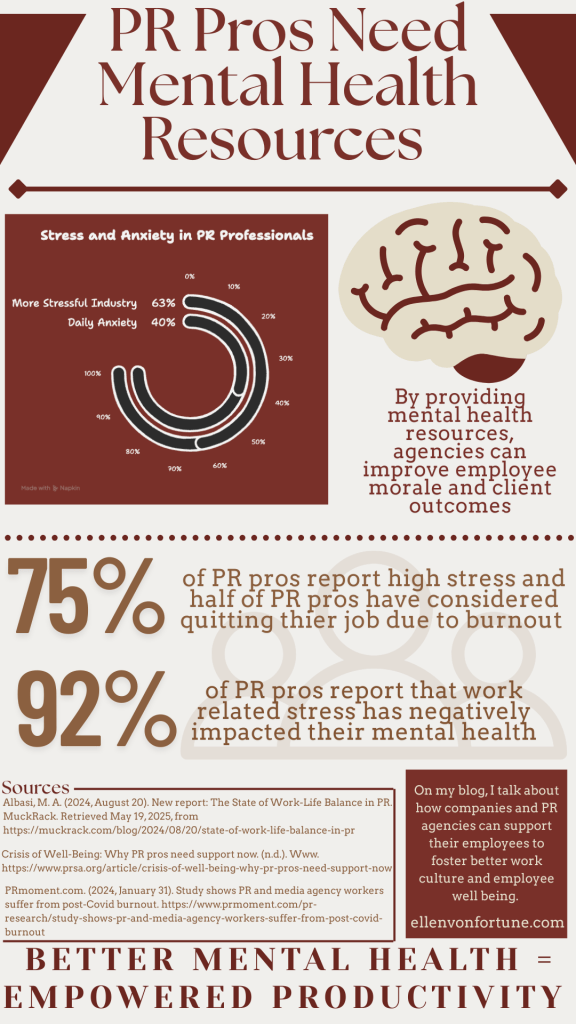
Recent studies show that 92% of PR professionals report that work-related stress has negatively impacted their mental health, with many experiencing feelings of loneliness and burnout. The nature of social media is a 24/7 news cycle, pressure to respond right away, and the emotional toll of being active online every day, leaving little room for downtime.
Social media burnout doesn’t just affect emotional well-being but also physical health. Overwhelming workloads and the expectation to be always “on” can lead to insomnia, weakened immune systems, and more. For industry leaders, let me translate: this means higher turnover, lower morale, and decreased creative output.
To maintain a healthy, high-performing work environment, PR agencies, I believe, should move beyond surface-level wellness initiatives and invest more in mental health support. Here are some ideas:
- Access to counseling: whether it’s virtual or in-person sessions with a mental health professional, can help people who might struggle or do struggle with stress or anxiety due to social media.
- Mental health days: including mental health days (used like sick days), would allow professionals to step back and recharge, reducing the risk of frequent burnout.
- Benefits: When hired, employees get discounted access to meditation apps, gym memberships, or other mental health supportive resources.
- Workshops: regular training on stress management and self-care when experiencing burnout, which would empower employees to prioritze their mental well-being.
Fostering a workplace culture where mental health is openly talked about is equally as important as other initiatives taken. PR agencies are uniquely positioned to lead by example, using their communication expertise to normalize conversations about mental health, both internally and in the work they do for their clients. Sharing personal stories, collaborating with mental health organizations, and running mental health awareness campaigns can help reduce the stigma around mental health and encourage employees to seek help.
Leaders in PR agencies need to recognize that mental health support is not a luxury, but more a necessity for quality work and employee morale. By prioritizing comprehensive mental health benefits and creating a culture where mental health conversations are normalized, agencies can protect their employees. Agencies can reduce burnout while fostering greater creativity and long-term success.
While the demand for online communication and social media continues to grow, so should our commitment to the well-being of employees. I believe it is time for PR agencies should put mental health at the root of their business strategy, because a healthy workplace means better outcomes.
 ellen
ellen 
Leave a comment